


EAGE GET 2026: International visitors explore geoscientific research in Lower Saxony
Where can geothermal energy be used? Which processes affect underground hydrogen storage? And how can geological structures deep beneath our feet be detected and visualised? The role of the subsurface in the energy supply of the future was the focus of a field trip to GEOZENTRUM Hannover by international geoscientists on 6 November.
Field trip to GEOZENTRUM Hannover
Geoscientists and Engineers from nine countries took part in the field trip as part of GET 2026 – the 7th EAGE Global Energy Transition Conference & Exhibition, held in Hannover that week. The EAGE conference addresses the challenges and opportunities of the global energy transition.
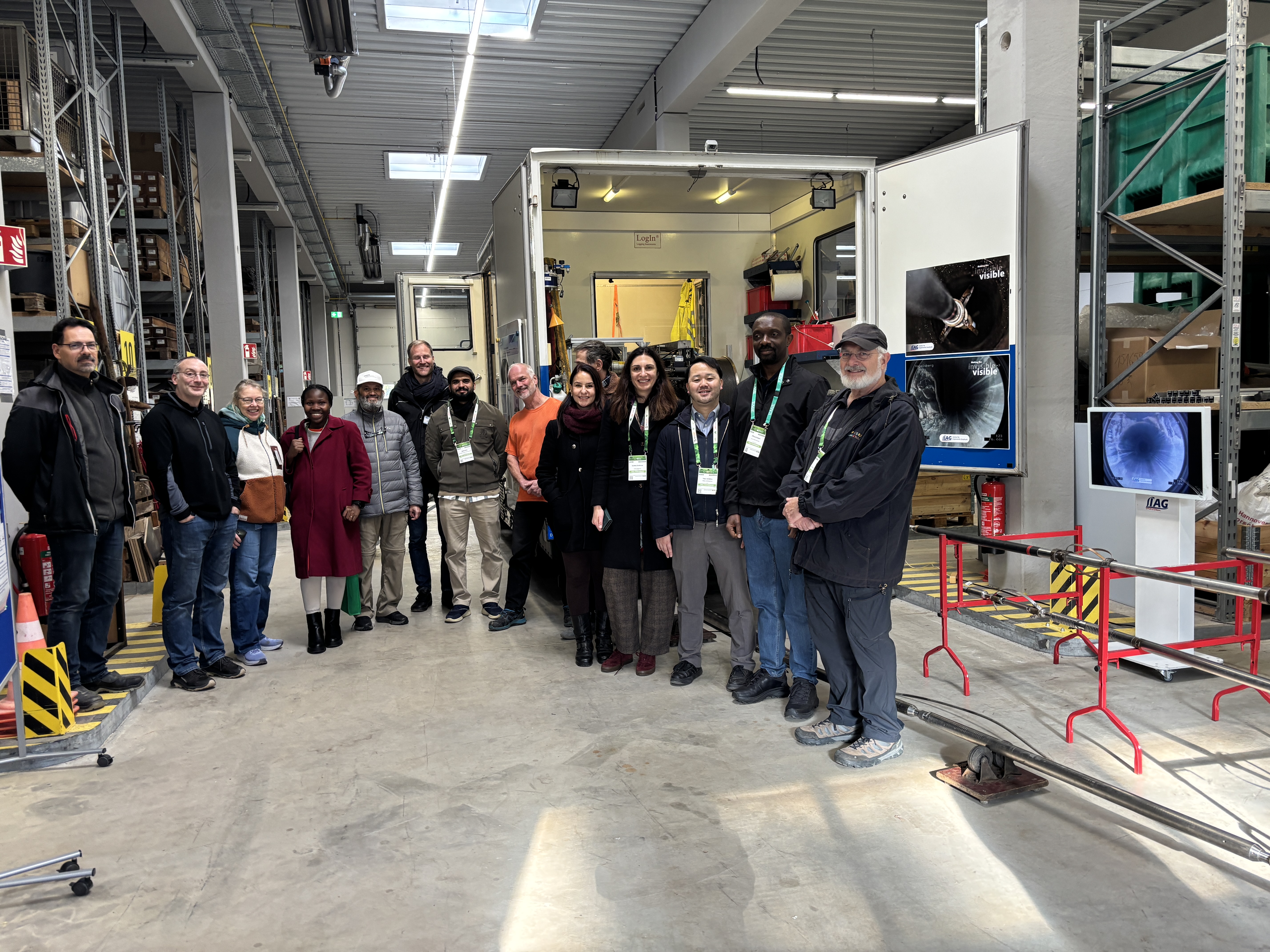
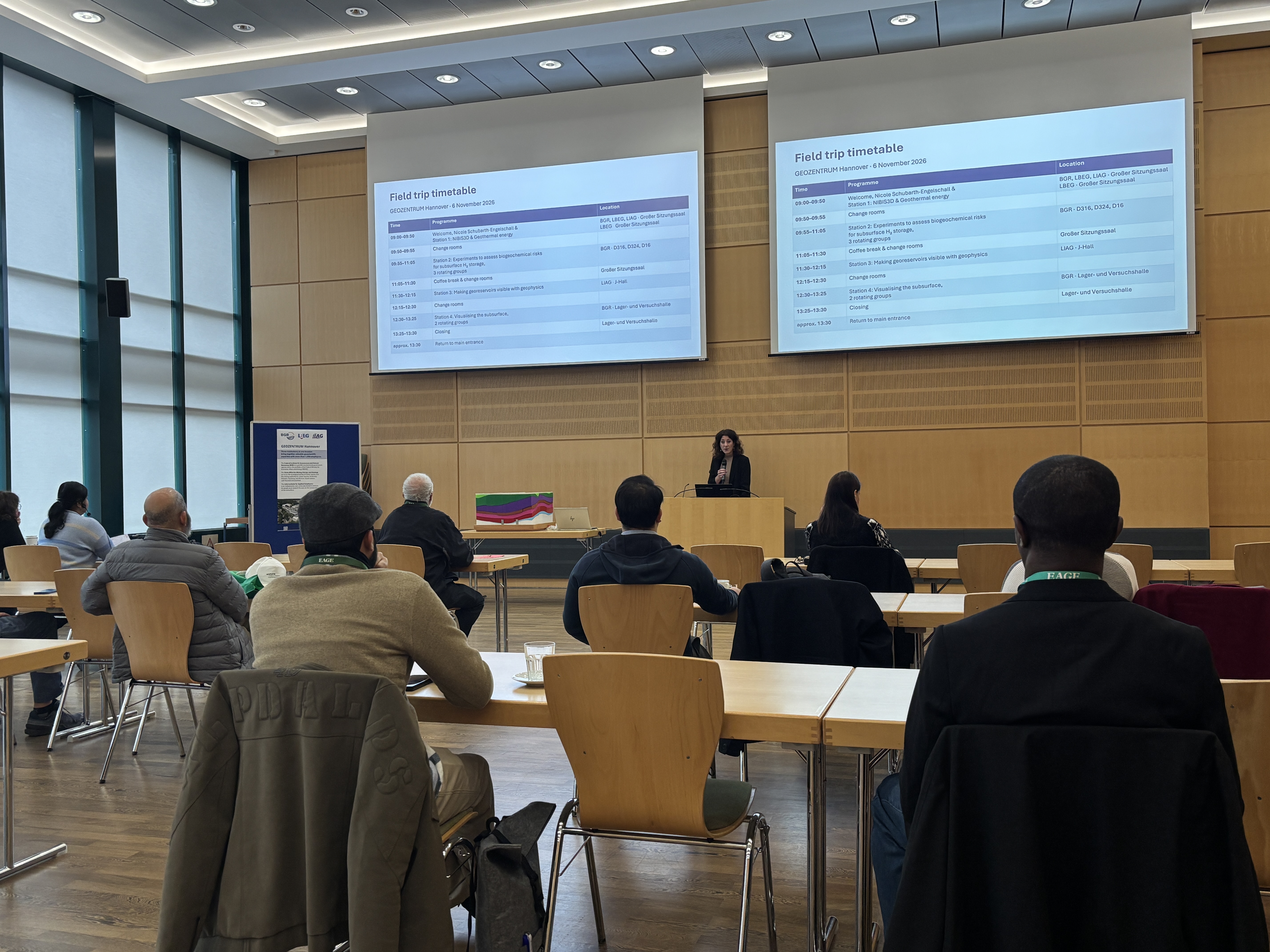
During their visit to GEOZENTRUM Hannover, participants gained detailed insights into the work of the Federal Institute for Geosciences and Natural Resources (BGR), the State Authority for Mining, Energy and Geology (LBEG) and the LIAG Institute for Applied Geophysics. At GEOZENTRUM Hannover, the three institutions bring together research, specialist geoscientific information and practical applications.
The tour showcased their work at four stations. It began with an introduction to LBEG’s Lower Saxony Soil Information System (NIBIS) and the online portal “Geothermie – geht das bei mir?” (“Geothermal energy – is it an option where I live?”). In GEOZENTRUM’s laboratories, BGR scientists then demonstrated how microorganisms can consume and transform hydrogen in geological storage systems, and how hydrogen can react with rocks.
The LIAG Institute for Applied Geophysics then illustrated how geophysical data provide an essential basis for subsurface exploration and modelling: while the drone on display enables airborne electromagnetic measurements, the logging vehicle acquires data from boreholes down to depths of around six kilometres.
The final station, hosted by BGR, focused on innovative ways of visualising the subsurface using 3D printing and virtual reality.
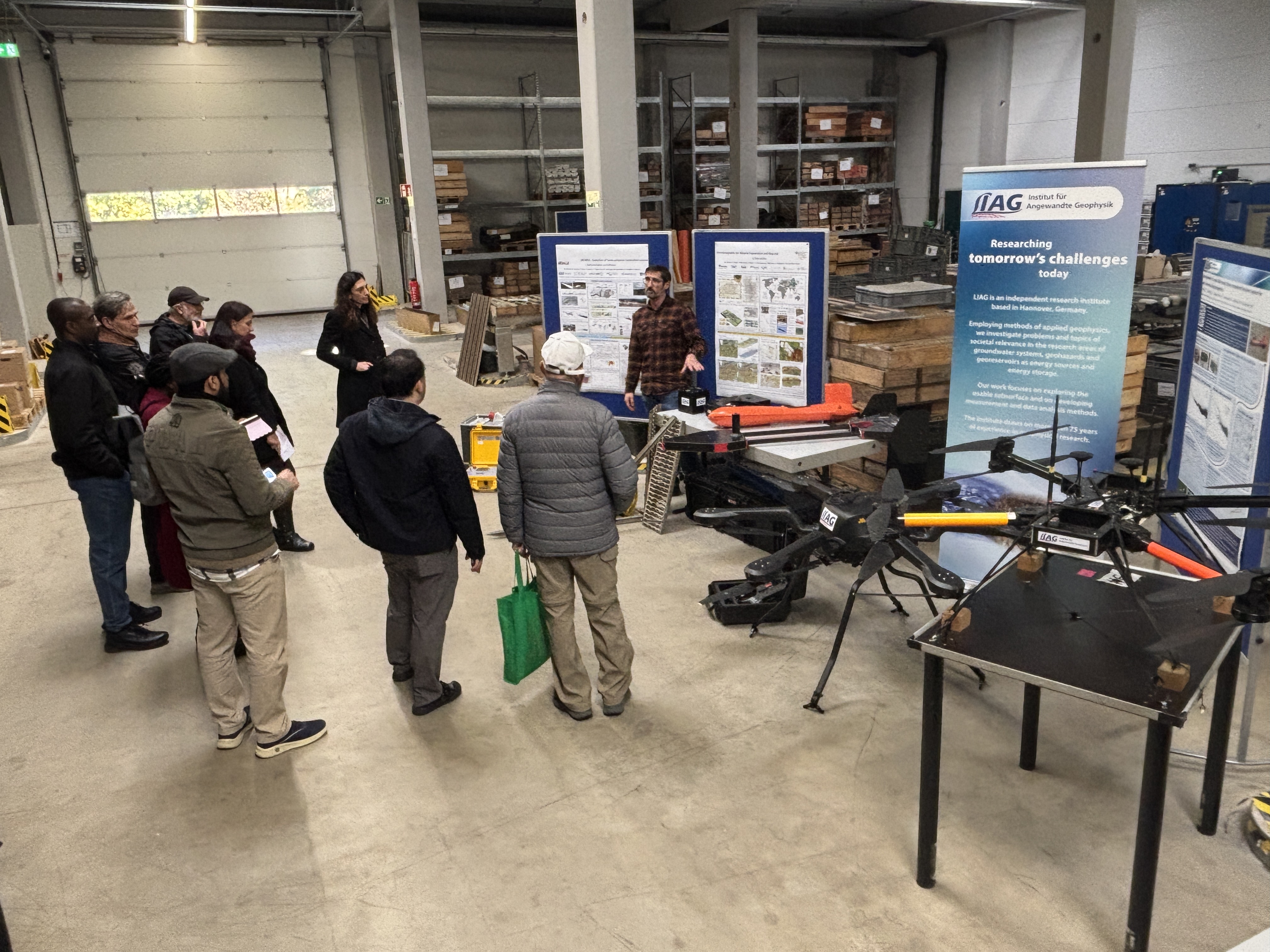
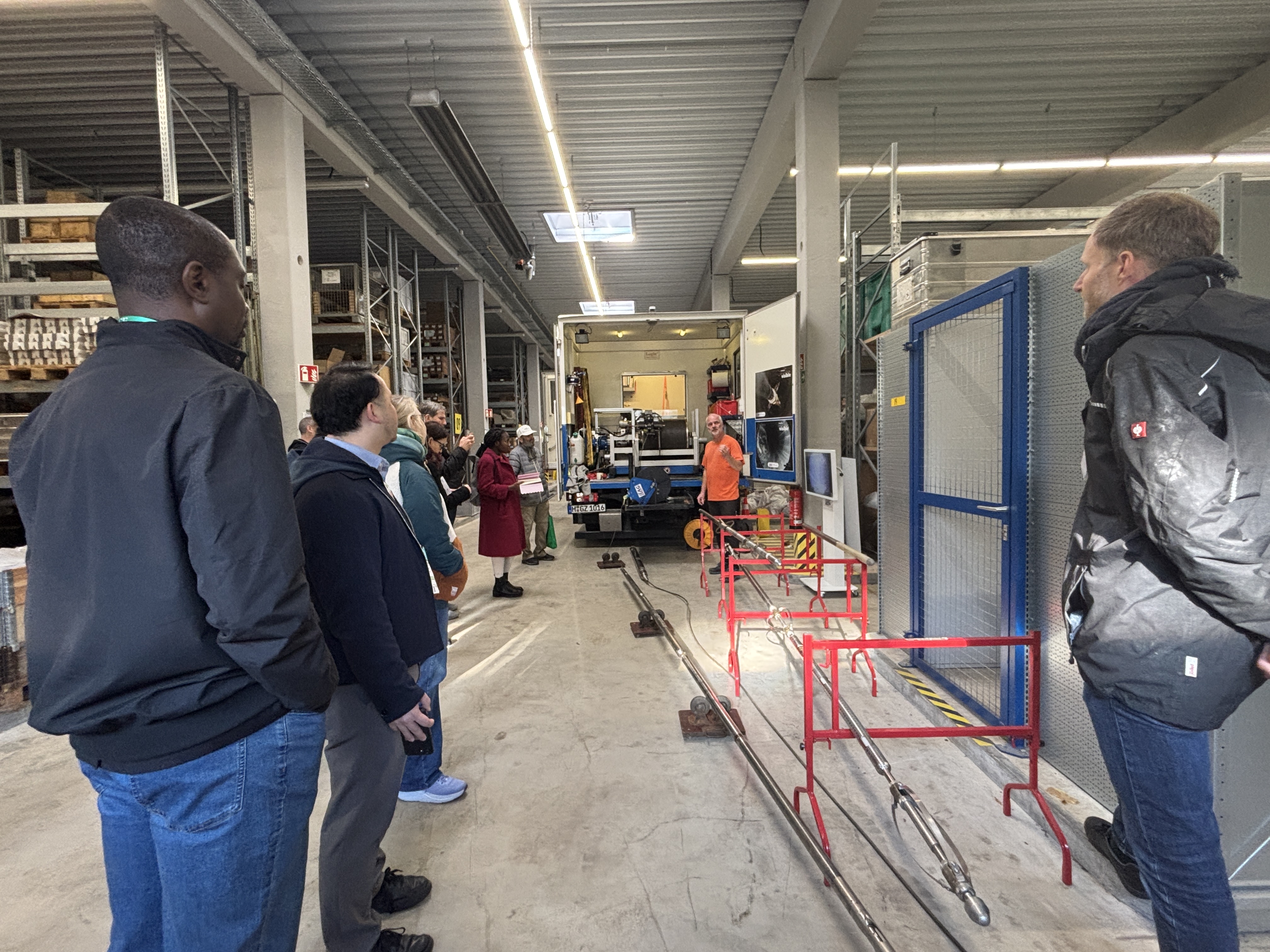
The message of the field trip was clear: the energy transition begins deep beneath our feet. Using geothermal energy or safely storing hydrogen and CO₂ underground requires precise knowledge of what lies where beneath the surface – and how the subsurface can be used now and in the future. All three institutions at GEOZENTRUM Hannover have worked in this field for many years, conducting investigations and developing methods for the future.