


Publication on ESR thermochronology in the Eastern Alps highlighted by AGU
Recent publication on ESR thermochronology in the Eastern Alps highlighted by AGU: Using a novel application of electron spin resonance (ESR), researchers from LIAG – Department Geophysical Parameterization and Department Geophysical Exploration – together with international partners demonstrate that the Brenner Fault in the Eastern Alps was active during the Quaternary. The study was published in Geochemistry, Geophysics, Geosystems and featured as an Editor’s Highlight in the Eos magazine of the American Geoscience Union.
Brenner Fault: a key Alpine structure
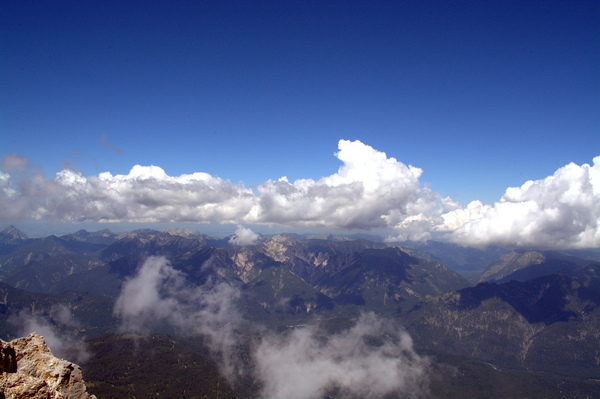
How can recent tectonic activity be identified along a major Alpine fault whose long-term evolution is well known, but whose recent activity has remained controversial?
The Brenner Fault is one of the main tectonic structures of the Eastern Alps. Striking north–south, it plays a major role in landscape evolution and deformation, within a densely infrastructured region connecting northern and southern Europe. Although its geological history is well constrained up to the Miocene, its recent activity has remained uncertain due to limitations of conventional dating methods.
A novel application of ESR thermochronometry
The authors apply ESR in an innovative way. While traditionally used to date sediments, it is here used to determine rock cooling rates at very low temperatures (~30–50°C) near the Earth’s surface. This allows reconstruction of exhumation through numerical modeling and provides constraints on possible slip rates during the Quaternary. The results demonstrate that the Brenner Fault was tectonically active during this period.
High deformation rates near the fault
Deformation is concentrated within about 1 km of the fault zone, where rates may locally exceed 1 mm/year, while rocks farther away show significantly lower rates. These findings reconcile previous discrepancies and provide key insights into Alpine tectonics and geological hazard assessment.
The study: Argante, V., Tsukamoto, S., Tanner, D. C., von Hagke, C., Brandes, C., Zhang, J., et al. (2026). Electron spin resonance thermochronometry indicates quaternary activity of the Brenner Fault (Eastern Alps). Geochemistry, Geophysics, Geosystems, 27, e2025GC012484. https://doi.org/10.1029/2025GC012484